Many learners feel confused about has been vs have been. You may see both in sentences and wonder which one is correct. The truth is simple. These forms follow a clear rule, and once you understand it, you will not mix them again.
In this lesson, I will explain has been vs have been like a teacher in a classroom. You will see easy examples, clear rules, and real-life usage. By the end, you will feel confident using both forms in your daily English.
Let’s start step by step and make everything very clear.
Simple Answer in One Look of Has Been VS Have Been
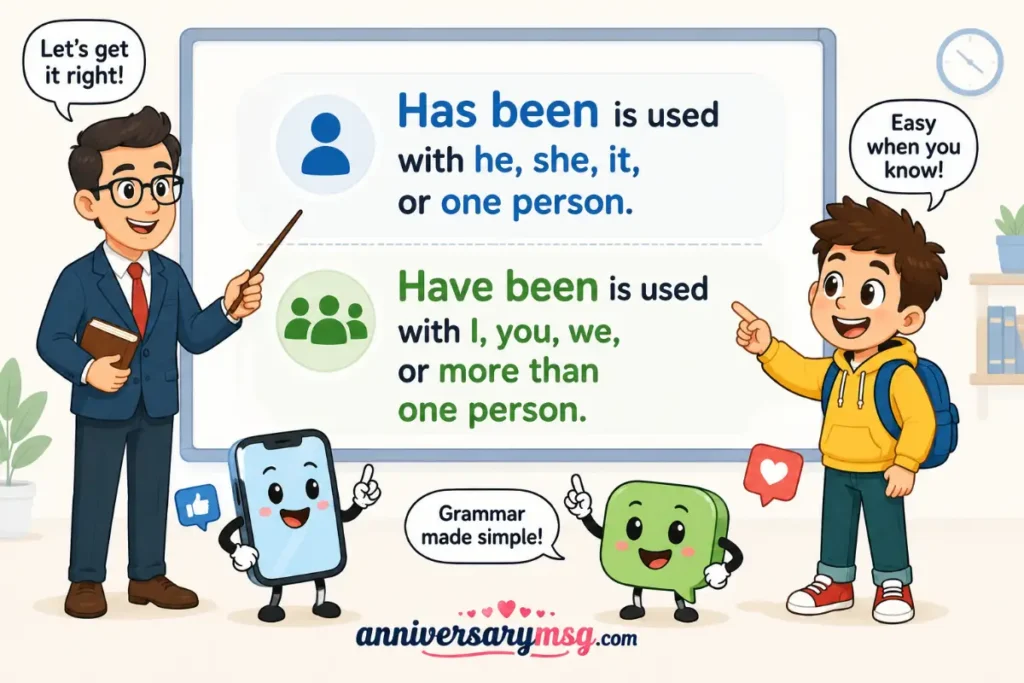
Has been is used with he, she, it, or one person.
Have been is used with I, you, we, or more than one person.
What This Means in Simple English
Think of has been and have been as helpers in a sentence. They show that something started in the past and is still true now or has just finished.
Use has been when you talk about one person or thing.
Example
She has been tired all day.
Use have been when you talk about yourself or more than one person.
Example
They have been busy this week.
So the idea is simple.
One person uses has.
More than one person uses have.
Why People Mix Has Been VS Have Been
Many people get confused because both forms look very similar. Only one small word changes.
Another reason is that in some languages, this rule does not exist. So learners try to use one form for everything.
Also, in fast speaking, people do not always notice the difference.
Example
He has been working.
They have been working.
Both sound close, but the subject is different.
That is why confusion happens.
Clear Difference Explained Simply
Let’s make it very easy to see.
Use has been with
He
She
It
One name
One thing
Example
Ali has been studying.
The dog has been barking.
Use have been with
I
You
We
They
More than one person
Example
I have been learning English.
They have been playing outside.
So remember this rule
Singular uses has
Plural uses have
Which Form Should You Use
Ask yourself one question
Are you talking about one or more than one
If it is one
Use has been
If it is more than one or includes you
Use have been
Example
She has been waiting for you.
We have been waiting for you.
This simple check will help you choose the correct form every time.
Easy Real Life Sentences You Can Use
Here are simple sentences you can use in daily life.
I have been feeling better today.
You have been very kind to me.
We have been working since morning.
They have been watching a movie.
He has been calling you all day.
She has been learning English.
It has been raining since morning.
Read these again. Notice how the subject changes the form.
Where This Expression Comes From Simple History
These forms come from the verb “to be” in English.
In the past, English used different forms for singular and plural subjects. Over time, this rule stayed strong.
That is why today we still say
He has
They have
Then we add “been” to show time or action that started before now.
So the structure became
Has been
Have been
This is how English kept its pattern simple but clear.
Moving Forward to Deeper Understanding
Now you understand the basic rule of has been vs have been. You know when to use each one and why people mix them.
In the next section, we will go deeper. You will learn how these forms are used in real life, in culture, and in different situations. You will also see common mistakes and how to fix them easily.
How This Form Is Understood in Culture and Stories
In everyday English, has been vs have been is not just grammar. It also shows time and experience.
When people speak, they use these forms to talk about life, work, and feelings.
Example
She has been through a lot.
They have been friends for years.
These sentences show more than action. They show experience and time. This is very common in stories, conversations, and daily talk.
So, these forms help people explain what started before and still matters now.
Biblical and Mythological Meaning of Has Been VS Have Been
In simple terms, English in religious or old texts also uses forms like these to show time and truth.
Example ideas you may see
He has been faithful.
They have been chosen.
These sentences show something that started before and still holds meaning.
The idea is not about grammar only. It is about showing lasting truth or ongoing action.
Symbolism Explained in Simple Words
What One Version Represents
Has been represents one person or one thing. It feels personal and focused.
Example idea
She has been strong.
This shows one person’s journey or action.
What the Other Version Represents
Have been represents a group or more than one. It feels shared and collective.
Example idea
They have been strong.
This shows a group experience.
So the difference is not just grammar. It also shows if the meaning is about one or many.
Related Words About Has Been VS Have Been
Here are some related forms that can help you understand better.
- Has
Used with one person or thing. - Have
Used with I, you, we, and they. - Had been
Used for past situations that finished before another past time.
For Example
She had been waiting before he arrived.
- Is being
Used for actions happening right now.
Example
He is being noisy.
- Was being
Used for past actions in progress.
Example
She was being careful.
These forms are connected and help you understand time in English.
How People Actually Use Has Been VS Have Been in Daily English
Let’s look at real-life sentences people say every day.
I have been trying to call you.
We have been living here for years.
They have been working on this project.
You have been very helpful.
He has been feeling sick.
She has been cooking since morning.
It has been a long day.
Ali has been learning fast.
The kids have been playing outside.
My phone has been acting strange.
These are natural and simple. You can use them in daily conversation.
Common Mistakes People Make Has Been VS Have Been
Here are easy mistakes and how to fix them.
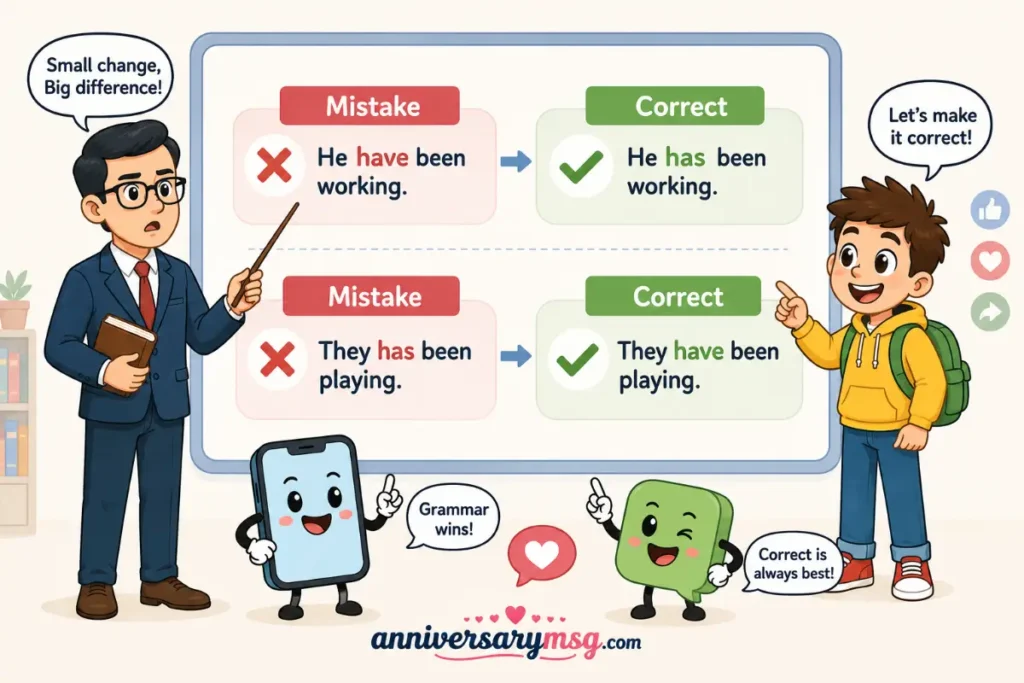
Mistake
He have been working.
Correct
He has been working.
Mistake
They has been playing.
Correct
They have been playing.
Mistake
I has been busy.
Correct
I have been busy.
The fix is simple
Match the subject with has or have
One person uses has
More than one uses have
Final Teacher Explanation Very Important
Let me explain it to you like a teacher in class.
When you use has been vs have been, you are talking about something that started before now and is still true or just finished.
First, look at the subject.
If it is one person or thing
Use has been
If it is I, you, or more than one
Use have been
Do not overthink it. Just check the subject.
Practice with simple sentences every day. Soon, it will feel natural.
Final Answer Quick Recap
Use has been for one person or thing.
Use have been for I, you, we, and they.
This is the main rule.
Follow it, and you will always be correct.
Conclusion
Now you clearly understand has been vs have been. The rule is simple and easy to follow.
Use has been when you talk about one person or thing.
Use have been when you talk about I, you, we, or more than one person.
This small difference helps your English sound correct and natural. You do not need to memorize complex rules. Just look at the subject and choose the right form.
Keep practicing with simple sentences in your daily life. The more you use these forms, the more confident you will feel.
With time, this will become natural, and you will not even think about it.
Frequently Asked Questions FAQs
What does has been vs have been mean in simple words?
They show an action that started in the past and is still true now or just finished.
Is it correct to say he have been?
No. The correct form is he has been.
When should I use have been?
Use it with I, you, we, and they.
Why do people get confused between them?
Because both forms look similar and only one word changes.
Can I use both forms in writing?
Yes, but you must choose the correct one based on the subject.
Is has been used for plural?
No. It is used for singular subjects only.
Is have been used for one person?
No, except for I and you.
How can I learn this quickly?
Practice simple sentences and always check the subject before choosing.

Ryan is a creative writer and relationship content specialist who believes in the power of meaningful words. He focuses on anniversaries, love notes, and memorable messages that make people feel connected. When not writing, Ryan loves kayaking, attending live jazz performances, and collecting vintage postcards from his travels.